How parallel computing can be (in)efficient
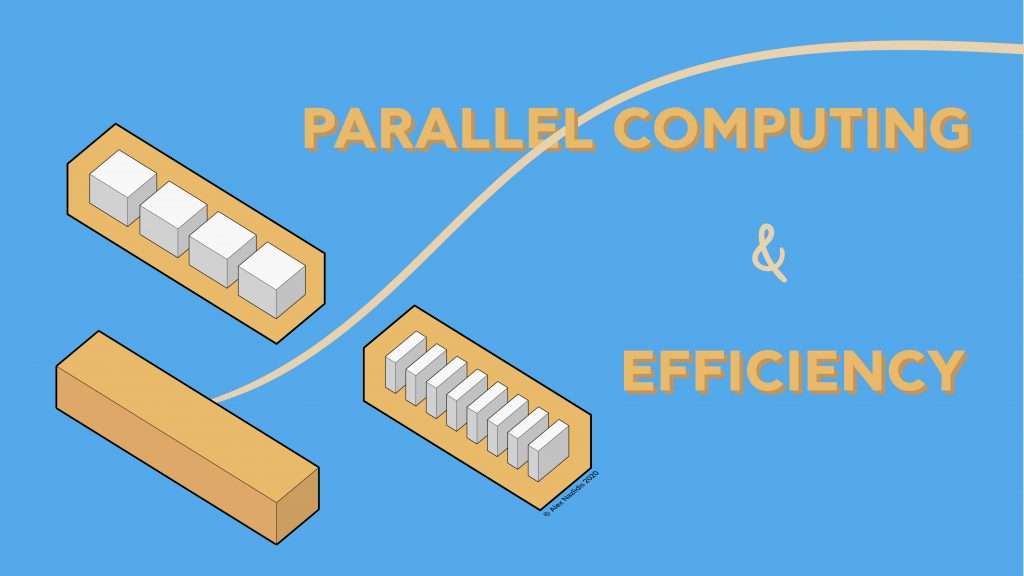
Today, we demand much more from our devices and we take for granted that they all work nice and fast. Without realizing, we usually greatly value a speedy processing of our tasks. Speed is thus of the essence, but how do current-day devices cope with this? The answer: your devices can multi-task.
Aida B. Paalman-de Miranda: a topologist from Amsterdam
On 11 May 2020 Prof. dr. Aida Beatrijs Paalman-de Miranda passed away. Aida (Ietje) Paalman-de Miranda was professor of mathematics between 1966 and 1997 at the Korteweg-de Vries Institute, the mathematics research institute of the University of Amsterdam.
The eerie phenomenon of quantum entaglement
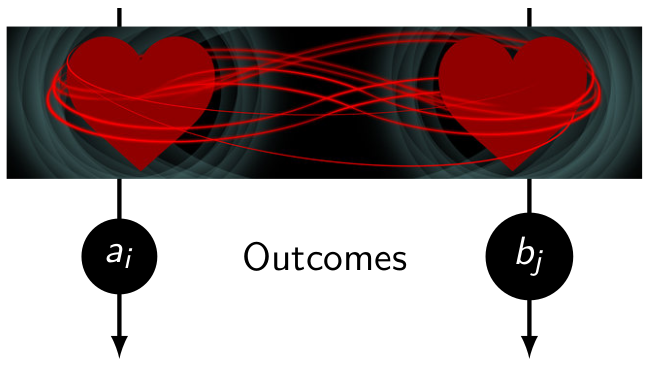
In this article, I will discuss the weird phenomenon called quantum entanglement, to which Albert Einstein referred as "spooky action at a distance".
How the schedule in the TATA Steel Chess Championship forced Carlsen to help Caruana win
Every January, the best chess players in the world compete in the TATA Steel Chess Championship, organized in Wijk aan Zee (The Netherlands). Among this year’s fourteen participants were Magnus Carlsen, world no. 1, coming into the tournament with an unbeaten streak of 104 matches, and Fabiano Caruana, the world no. 2.
The Mysterious R explained in simple terms
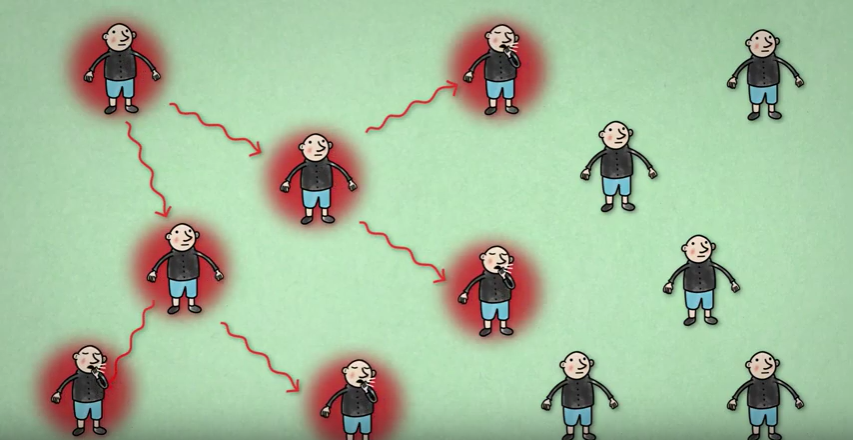
During the Corona pandemic the reproduction number  appeared in much of the media. While it is not at all obvious what this quantity measures exactly, it is obvious that making it smaller than 1 really is crucial in controlling the spread of the virus. So what is this really?
Scale-free networks, a controversial topic solved by extreme mathematics
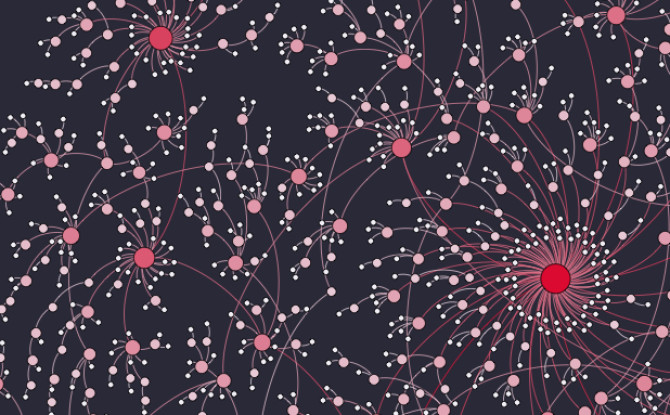
In 2016 a company calculated that the average number of followers in Twitter was about 707. Although this might already sound like a lot, it pales in comparison with the top Twitter users. There are currently more than 100 users that have more than ten million followers. Some, like Barack Obama or Katy Perry, even have more than one hundred million followers, which is roughly 140.000 times larger than the average.
How the popular become even more popular

Many networks, from technological to social networks, and from the world-wide web to collaboration networks, have a hub-like structure. Why is this the case, and why are they not much more homogeneous?
Interview with Onno Boxma

On Friday 11 October I went to Eindhoven for an interview with Onno Boxma. Onno became a professor of stochastic operations research in 1998 in Eindhoven Technical University, since 2018 he is an emeritus professor.
How uncertainty can make traffic run smoother
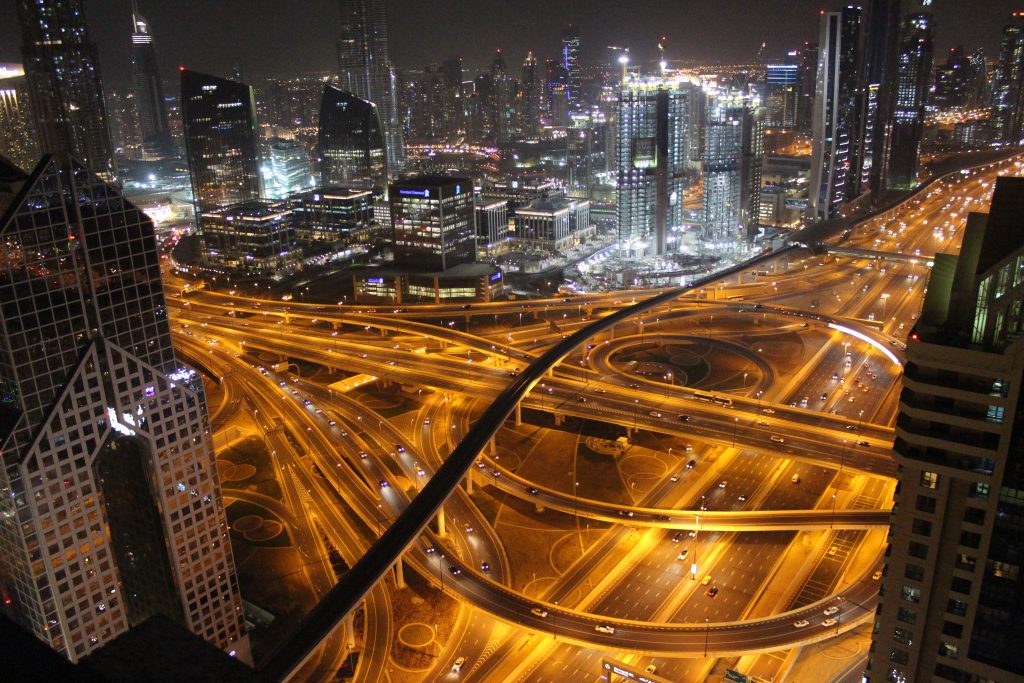
In 2014, in the Netherlands, Belgium and Germany, the average person spend approximately 40 hours in a traffic jam - that is 5 work days! In this article, I will explain how mathematical models with uncertainty help traffic engineers to make decisions that improve traffic.
Contest: How fast can you travel around the Netherlands?

. Suppose you are coming to the Netherlands for the first time, you want to enjoy your time in the country in the best possible way and probably visit and see as much as possible. So you rend a car and you decide to travel around. But now the challenge begins, planning such a trip!