Mathematical models describe a real-life phenomenon, using mathematical language. The model will not exactly be like the reality, but can be used to learn from and help us make decisions.
When we fight for limited common resources, our decisions will shape opponents’ responses and vice versa. What does mathematics have to say about such situations?
In 1995, a flood in the town of Itteren led to the evacuation of 250 000 people and a million animals. Consequently, the Dutch regional water authorities were tasked with calculating how often an area overflows, such that better measures could be taken. How do these calculations work?
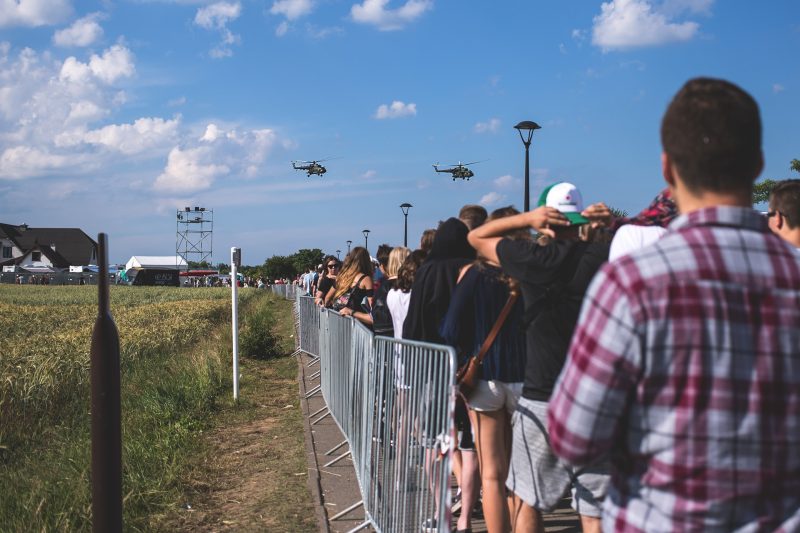
Leftovers are usually no issue. But what if you’re cooking for hundreds of people? Using
mathematics, specifically the Central Limit Theorem, we try to cook just the right amount.
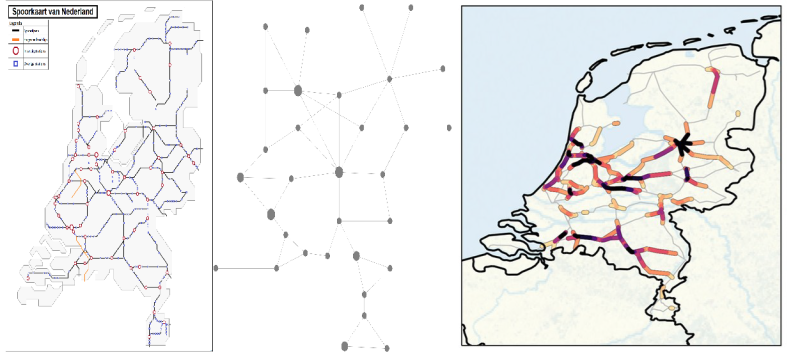
We can use mathematics and more specifically networks to study logistics chains. In the first article we described how logistic chains work. In this second part, we go one step further and dive in the mathematics.