The two community Kuramoto model - Animation
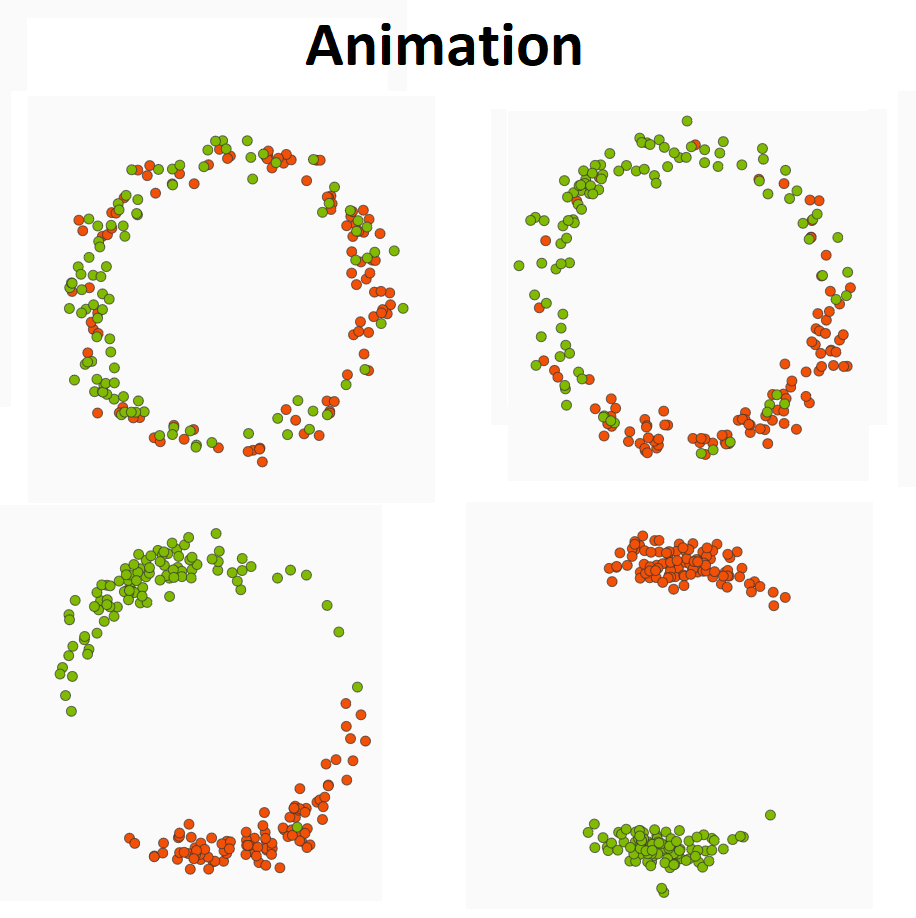
In the interactive simulation in this article, developed by Martijn Gosgens, you can see how the two-community Kuramoto model works.
From the ateliers of great masters to the labs of the Rijksmuseum

As watching actual paint dry is not the most exciting activity for a scientist, we took the safest and the fastest method: computer modeling of chemical processes happening in paint. The method does not damage any paintings, and good models can predict years of paint drying in an hour or two.
Academic life in a lockdown
I did a thought experiment: what would have happened to the world if corona would have hit us in 1990? Or in 2000? So my thoughts went back to my early years as an academic, wondering how we would have coped with the pandemic a few decades ago.
Stopping network bottlenecks before they stop you
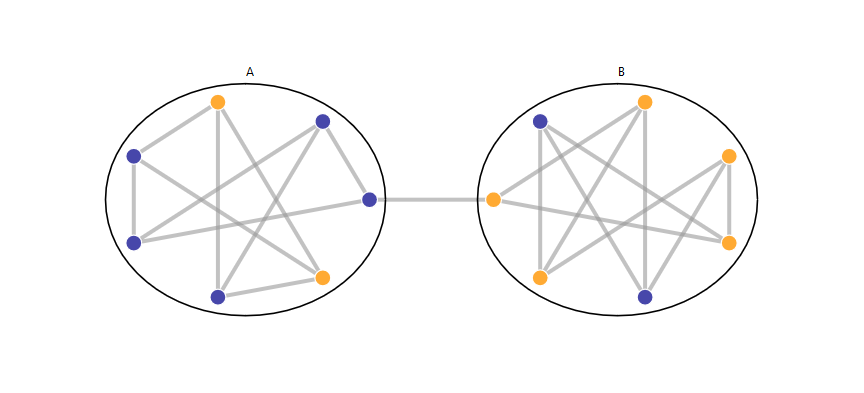
Detection of bottlenecks is a topic that mathematicians have been working on for decades and which they continue to work on.
Interview with Birgit Sollie
Birgit Sollie is a PhD student at the VU Amsterdam, where she does research in stochastic processes and mathematical biology. In this interview she talks about her research and her motivation for doing mathematics.
José van Dijck: "I draw inspiration from the relationship between technology, user and ideas"
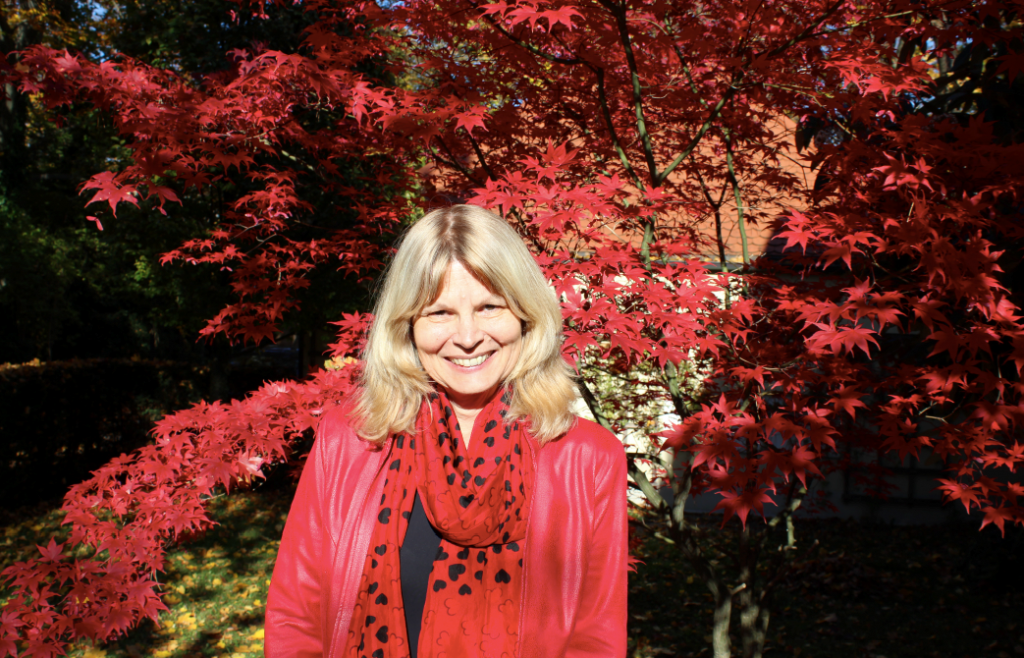
José van Dijck is a University Professor of Media and Digital Society at Utrecht University. Her research concerns media, social media and media technologies.
Financial Networks: "A complete overview of interbank exchanges would help prevent a new financial collapse"
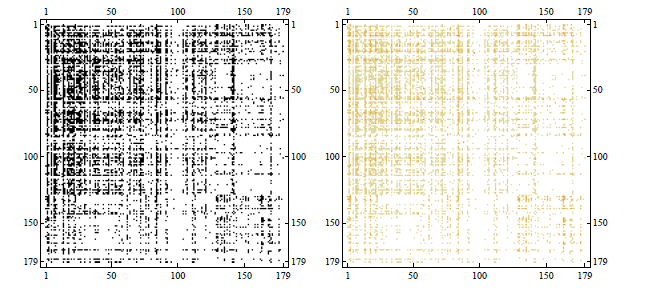
A complete overview of interbank exchanges would help prevent a new financial collapse. However, banks do not provide this information: this is why a “network reconstruction” methodology to infer the unobserved connections is needed.
"A digital app can help reconstruct the virus transmission contact network"

Directly or indirectly networks played a crucial role during the Corona health crisis. During this online event the speakers shed light on the relevance of networks in combating the epidemic, each one from a different point of view, namely from that of the exact sciences, medicine, communication and social sciences respectively.
Synchronization in the body-clock
The body-clock, which is a cluster of neurons in the brain, has the same structure in all mammals, which is remarkable. It consists of two groups: two-communities of neurons that are strongly linked within each community and less strongly linked between the communities.
The golden rule of staffing in contact centers

We can all agree, a no. 1 source of frustration is the endless waiting on hold for a call center agent to pick up the phone. Interestingly, over the last 111 years mathematicians have been working on a vast theory to solve this call center inefficiency.