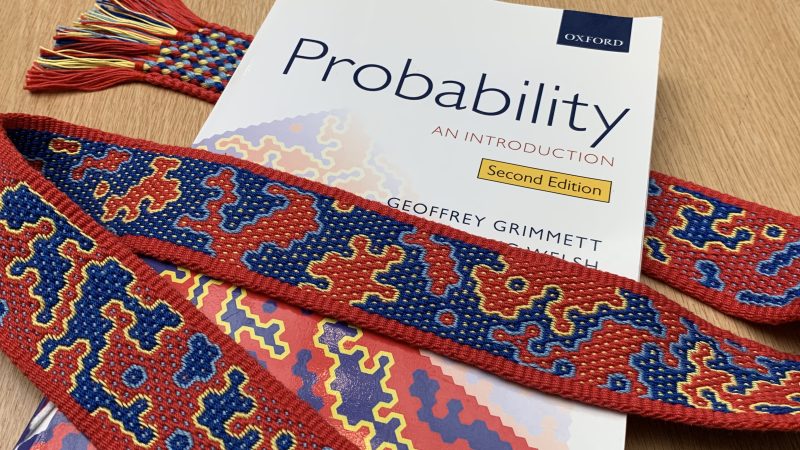
In weaving, mathematical principles provide a rich source of inspiration for new designs. Find out how percolation on a hexagonal lattice can be translated into a woven pattern!
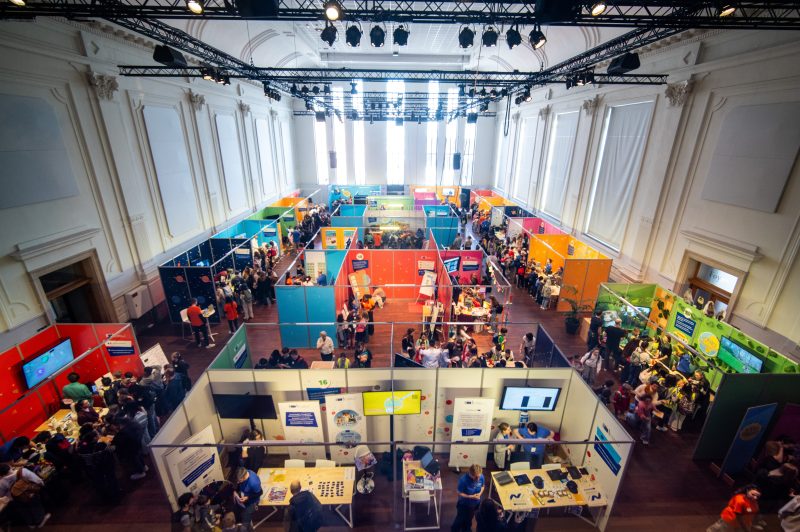
We participated in a three-day science fair in Brussels, called Science is Wonderful!, for which we designed an interactive booth aimed at introducing young people to network science. Here's what we learned!
In the summer of 2026, workshop center Eurandom is hosting a special mini-symposium, organized on the occasion of Christian Borgs, Professor of Computer Science at UC Berkeley, receiving an honorary doctorate at TU/e