As the saying goes, all good things must come to an end. Unfortunately this also applies to the NWO Gravitation program NETWORKS. After eleven years, we now find ourselves entering the very last phase of this remarkable journey. Looking back, many things unfolded exactly as we had hoped, while others took directions we could never have anticipated. That mix is, of course, part of what made the experience so rich.
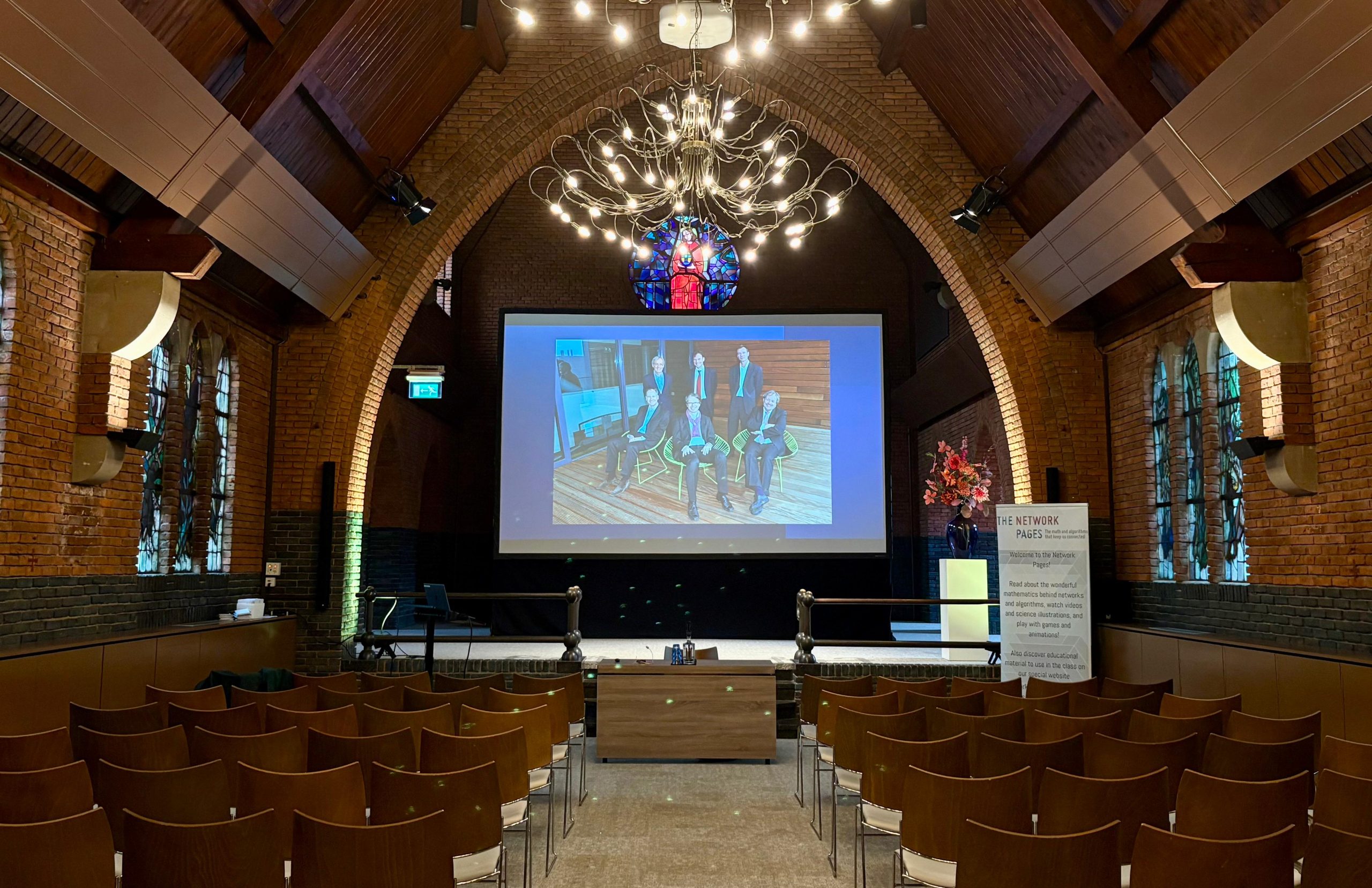
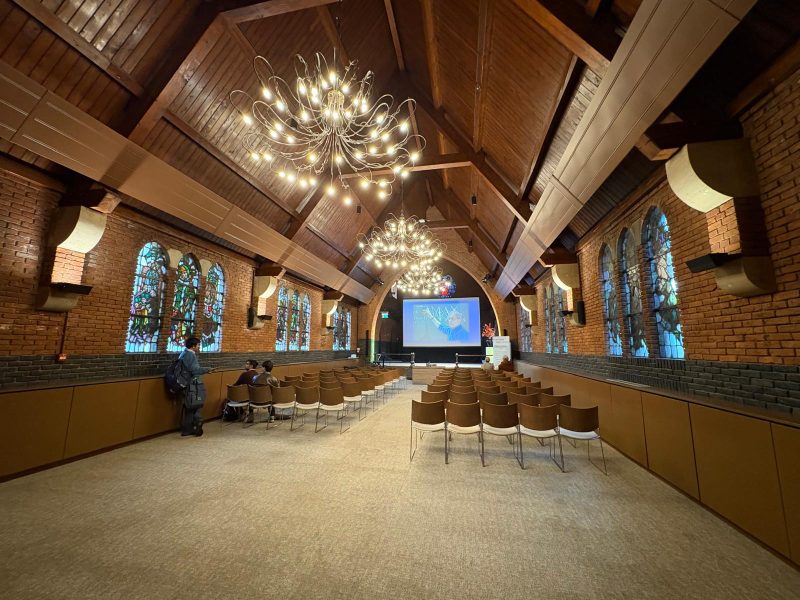
It was wonderful to see so many current and former program members gathered at our final event in Soesterberg. The occasion offered ample opportunity to reflect on how far we have come. When we started out, we had no prior experience with setting up an endeavor of this scale. But, to paraphrase Pippi Longstocking’s famous words: we had never done it before, so we were quite sure it would work out. And in many ways, thanks to the dedication, creativity, and collaboration of everyone involved, it truly did.
Writing a grant of this magnitude was, in itself, an intense and truly memorable process. It began with forming a clear vision of what the broader community at that time regarded as the central scientific challenges in our field. Beneath that overarching vision lay the equally important task of weaving together the individual strengths and research themes of all co-applicants. Each of these themes needed to find a natural and meaningful place within the proposal, and together they had to form a coherent, compelling whole.
Another essential aspect was ensuring that the proposal would resonate not only with mathematicians, but also with a broader review committee. This meant striking the right balance: presenting mathematics at a high conceptual level while simultaneously demonstrating its relevance and connection to the world around us. In retrospect, navigating these layers — scientific depth, internal cohesion, interdisciplinary appeal — was demanding, but also deeply rewarding. It shaped the identity of NETWORKS from the very outset and set the tone for everything that followed.
Once we had been awarded the grant and the project was officially underway, everything needed to take concrete shape. Somehow, all the plans that had been described in relatively abstract terms in the proposal had to be brought to life. We implemented a number of mechanisms to ensure both quality and breadth: for example, each PhD student was assigned two supervisors, ideally from different disciplines, to encourage interdisciplinary guidance. Every PhD student was also expected to undertake an internship — either at a company or a research institute — to broaden their practical knowledge and experience.
Bringing these mechanisms to fruition required careful decisions regarding the profiles of the researchers we wanted to recruit, the senior researchers who would be jointly supervising them, and the design of an extensive training program for the junior researchers. Balancing these elements was challenging, but it was also an essential step in transforming the vision of NETWORKS into a tangible, vibrant research community.
On a personal level, this experience has been incredibly rewarding. Naturally, leading such a large consortium was a unique opportunity, one I could never have realized without the constructive and loyal support of the management team. One of the program’s main goals was to bring together stochastic and algorithmic approaches. Whether this goal was fully achieved in an absolute sense, I cannot say — but I can certainly attest that, as a stochastician, I have had the chance to work on a wide range of optimization problems, many of which also involved stochastic elements in interesting ways.
I have also learned a great deal about different application domains. For instance, I had never imagined that I would one day work on modeling social interactions, but this became part of my research portfolio. Beyond that, my interest in data-driven techniques has grown substantially, particularly in areas where statistics plays a central role alongside modern machine learning methods. Overall, NETWORKS has broadened both my scientific perspective and my methodological toolkit in ways I could not have foreseen.
Michel Mandjes is the main applicant and project leader of NETWORKS, a research program funded by the Dutch Ministry of Education, Culture and Science through the Netherlands Organisation for Scientific Research. The Network Pages, the website you are reading this on, grew out of NETWORKS. The program started in the Summer of 2014 and ran for eleven years. It covered a broad range of topics dealing with stochastic and algorithmic aspects of networks. The aim of the program was to address the pressing challenges posed by large-scale networks with the help of stochastics and algorithmics. The focus was on modelling, understanding, controlling and optimizing networks that are complex and highly volatile.
After more than ten incredible years, the NETWORKS programme will officially conclude at the end of 2025. In light of this approaching milestone, the final NETWORKS conference & reunion took place.
When we wrote the grant application for NETWORKS, back in 2013, we obviously put all our energy into it, and tried to come up with the best proposal possible.
In November 2024, the Kick-Off meeting for BeyondTheEdge: Higher-Order Networks and Dynamics took place at Vrije Universiteit (VU) Amsterdam. The event marked the official start of the project, read an interview with Christian Bick, Principal Investigator and Project Coordinator of BeyondtheEdge.
The gut microbiome works hard to keep you healthy. To understand it, we need to know how nutrients travel through the gut. This is where gut flow enters the story. How can we simulate gut flow with mathematics?