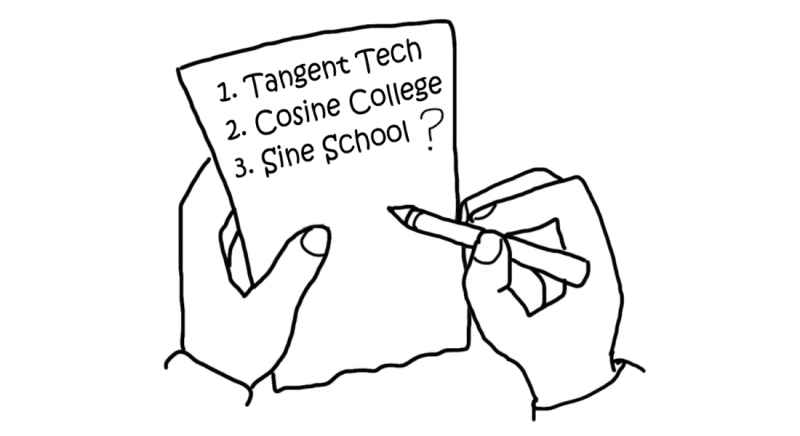
When we fight for limited common resources, our decisions will shape opponents’ responses and vice versa.
Game theory studies strategic interactions among individuals. “Selfish” individuals make decisions to benefit themselves, but instead of selfish, they call themselves “rational”. Game theory is widely used in economics, agriculture, politics, computer science, et cetera. When we combine game theory with queueing models, the decisions may be “whether to join or not a queue”, “whether to renege (abandon) or not after joining”, “when to arrive”, etc. In this article, I want to illustrate how game theory can be used to make a “when to arrive”-decision in a daily-life example.
Mrs. Wang is running a small restaurant: dumpling house. Each weekend, she visits Albert Cuypmarkt, to buy fresh groceries preparing for dumplings. If she visits the market when it is about to close, then she can avoid the crowdedness. However, one day when she arrived, the celery had been sold out. Because of that, she understands that she shouldn't go to the market too late. She starts thinking: when is the best time to go? A quick answer is it depends on when others decide to go, and others may think the same as Mrs. Wang.
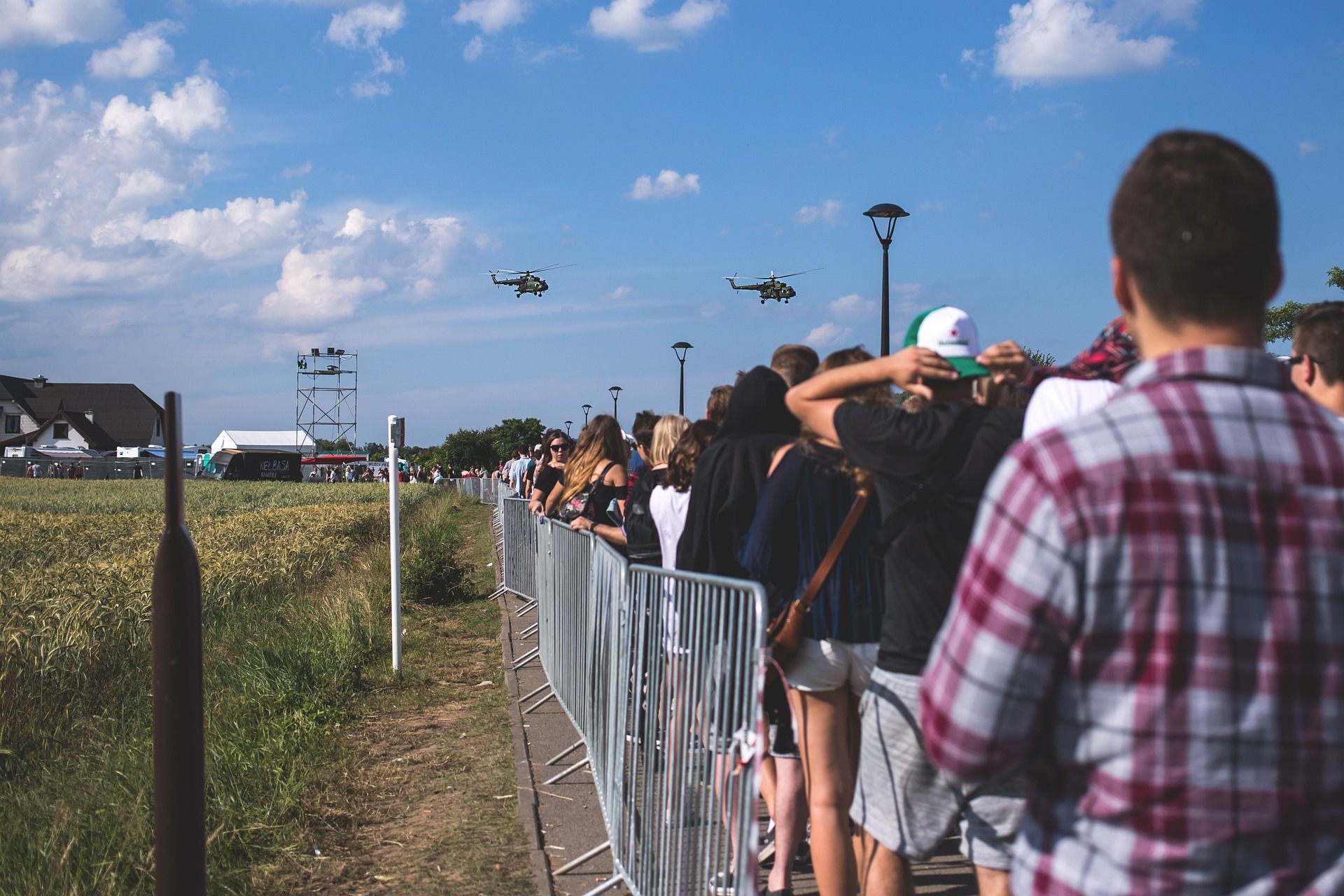
Mrs. Wang rests one day per week. She likes concerts, so during that day, she closes the dumpling house and usually books a concert ticket on Eventbrite. Some concerts are free seating, meaning there are no assigned seats. She likes to arrive earlier to get a better one. One night, she attended a candlelight concert, called A Tribute to Hans Zimmer. As usual, she arrived 20 min earlier but many people arrived even earlier than her. She had to sit behind a pillar and could not see the stage. Attending this concert was almost like listening to the audio. Also, winter in Amsterdam is chilly and rainy, so she endured the waiting time and coldness for nothing. Because of that, she decided for the next time, either to arrive much earlier (before the staff starts checking tickets) or right before the concert starts.
What is the best time? Apparently, it depends on others’ decisions. If it is a less popular concert, then others may also decide to arrive later, in which case Mrs Wang probably shall arrive on time for a good seat. The dilemma faced by Mrs Wang in the concert and the weekend market is the same: it is worth it to sacrifice time for better resources? Let us focus on the concert example, and analyze it from a mathematical perspective.
The best time to arrive according to math
To determine the best time for Mrs. Wang to go to the concert, we first specify and describe the scenario of arriving at the concert mathematically. Staff starts checking tickets 30 minutes before the concert starts. Individuals can choose to arrive earlier than the checking time to secure a better position, but they need to wait at least until the checking starts. If they arrive later than the commencement of the concert, then they are not allowed to get in. All individuals desire to have a better seat and wait less, but there is a tradeoff. Let “utility” be, vaguely spoken, the quality of the seat minus the waiting time, then everyone wants to arrive at a time that maximizes their utility.
We define each individual's "utility" as the quality of their seat minus their waiting time.
Note that the uncertainty here includes others’ decisions. Thus finding the optimal time for Mrs. Wang is not possible without knowing others’ arrival times. This means Mrs. Wang needs to have a complete contingent plan. Moreover, given Mrs. Wang’s decision, others may change theirs too. Our goal, turns out to be, finding an arrival time for everyone, with which both Mrs. Wang and others are satisfied with their decisions.
This concept is known as Nash equilibrium, which dates back to the time of Cournot, who in 1838 applied it to his model of competition in an oligopoly. A Nash equilibrium is a decision profile for everyone such that no one has an incentive to deviate given others’ decisions. Additionally, the decision may be pure, i.e. an exact arriving time, or mixed, i.e. probability of arriving at different times.
In this article, I will use a simpler example with only two individuals, to illustrate how to find the solution. The “recipe” can be applied to the original problem with more individuals and also other similar models, but this requires a bit more mathematical background in probability theory.
Imagine a situation where there are only Mrs. Wang and another girl named Zhu who attend the concert and there is only one good seat. Assume that the value of a bad seat is 0, and of a good seat is , where is equal to the cost of waiting for , i.e. . If Mrs. Wang decides to come right before the concert starts, then Zhu just needs to arrive a bit earlier than Mrs. Wang, since by doing so, she can get the good seat and her utility will be almost (since waiting time is almost 0). However, given Zhu’s option, Mrs. Wang would choose to arrive right before Zhu’s arrival time and claim the good seat.
If Mrs. Wang chooses to arrive 20 min. before the concert starts, then Zhu needs to decide whether to arrive earlier than 20 min. to secure the good seat, or arrive later to avoid waiting. If she decides to arrive earlier, then the best option is arriving right before Mrs. Wang, which gives her utility . If she is to arrive later, then the optimal choice is arriving right before the concert starts which gives her utility 0. However, given that Zhu decides to arrive right before Mrs. Wang, Mrs. Wang would change her plan, and choose to arrive a bit earlier than Zhu. So given one's choice the other one can always decide to arrive a little bit earlier increasing their utility because they get the good seat.
If Mrs. Wang arrives more than min before the concert starts, then Zhu’s best choice is arriving right before the concert starts. However, given Zhu’s choice, Mrs. Wang does not need to arrive that early, and she just needs to arrive a bit earlier before Zhu. It is inferred from this analysis that pure strategies can never be a Nash equilibrium. Thus, this situation does not have a pure solution!
A mixed solution to the rescue
Now consider a strategy where Mrs. Wang chooses to arrive somewhere in the 30 minutes before the concert with the same probability, in other words, the strategy is a uniform distribution on the time interval [0, 30 minutes]. If Zhu arrives at some time earlier than the closing time, then her waiting cost will be and the probability that Mrs. Wang arrives later than her is . In this case, Zhu gets the good seat with value 30 and her expected utility is
If Zhu chooses to arrive at a time earlier than 30 min, that means she has to wait for more than 30 min, and her expected utility is . Thus, when Mrs. Wang uses this "random" strategy, Zhu also prefers to arrive somewhere in the time interval [0, 30 minutes], without caring about the exact moment since her expected utility will be 0. This strategy is also Zhu’s optimal choice when Mrs. Wang uses it, thus this is a Nash equilibrium. One interesting phenomenon to note is if Mrs. Wang and Zhu both arrive right before the concert starts, then one of them will have utility . However, in the Nash equilibrium, Mrs. Wang and Zhu’s (expected) utilities are both 0. But what can we do, this is the equilibrium!
In this article, we illustrated the situation where game theory is applied and how to find the Nash equilibrium for a two-player game. In reality, things can be very complicated. There are usually multiple players, and they may have different values for a good seat. Also, part of the players may form a coalition. For example, the Israeli Queues, in which there is cooperation on top of the competition. There are specific algorithms that can used to find the solution for these more complex situations. For now the take away message is that when you compete with other people for the best seats at a concert then maybe you should all just agree to arrive at random times between the moment the counter opens and the concert starts!
What if I tell you that long queues in airports are also caused by the impatient passengers that arrive too far in advance at the airport? Today, we will analyze how the organization of the security check queue affects the waiting time of passengers.
We want our guts to be filled with a diverse range of mutually beneficial and competitive interactions, a perfect blend of friends, frenemies, and enemies to keep our guts active and body on its toes. Read how networks can help understand these interactions!
In October 2025 a masterclass on networks and algorithms will again be organised by the mathematics research program NETWORKS. Teachers and school students at the level of VWO 5-6 are welcome to join this two-day masterclass, no specific prior knowledge is needed, only enthousiasm about mathematics!
One of the main building blocks of modern AI-tools are artificial neural networks, abstract models inspired by the structure and functions of biological neural networks which enable machines to "learn". In this article, I will discuss some thoughts on this topic.
 , where
  , i.e.
  . If Mrs. Wang decides to come right before the concert starts, then Zhu just needs to arrive a bit earlier than Mrs. Wang, since by doing so, she can get the good seat and her utility will be almost
  (since waiting time is almost 0). However, given Zhu’s option, Mrs. Wang would choose to arrive right before Zhu’s arrival time and claim the good seat.
 . If she is to arrive later, then the optimal choice is arriving right before the concert starts which gives her utility 0. However, given that Zhu decides to arrive right before Mrs. Wang, Mrs. Wang would change her plan, and choose to arrive a bit earlier than Zhu. So given one's choice the other one can always decide to arrive a little bit earlier increasing their utility because they get the good seat.
 earlier than the closing time, then her waiting cost will be
  . In this case, Zhu gets the good seat with value 30 and her expected utility is
 . Thus, when Mrs. Wang uses this "random" strategy, Zhu also prefers to arrive somewhere in the time interval [0, 30 minutes], without caring about the exact moment since her expected utility will be 0. This strategy is also Zhu’s optimal choice when Mrs. Wang uses it, thus this is a Nash equilibrium. One interesting phenomenon to note is if Mrs. Wang and Zhu both arrive right before the concert starts, then one of them will have utility